
United Asia Automotive Group, Inc. (UAAGI) has expanded its automotive portfolio by introducing Radar to the the Philippine market. Already known locally as the distributor for brands like Foton, Chery, BAIC, and Lynk & Co, UAAGI now positions Radar as a “lifestyle” marque, with its first offering being the RD6 pick-up series.

Rather than using the traditional body-on-frame construction common in Philippine trucks, the RD6 distinguishes itself with a unibody platform, reminiscent of sedans and crossovers. Coupled with a multi-link rear suspension (instead of leaf springs), the aim is to elevate ride comfort and handling.
Two Flavors: Pure EV and Plug-In Hybrid
Radar offers two main variants of the RD6:
1. RD6 Econ (BEV)
The Econ is the pure electric version. It comes in three battery configurations:
- 63 kWh (4×2)
- 73 kWh (4×2)
- 73 kWh (4×4)

Output for the 4×2 trims is 245 PS and 309 Nm, while the 4×4 model jumps to 381 PS and 485 Nm.
Driving ranges vary: 327 km (63 kWh 4×2), 383 km (73 kWh 4×2), and 350 km (73 kWh 4×4).
It also includes smart features like Vehicle-to-Load capability (V2L) and a 2 kW portable charger.
2. RD6 EM-P (PHEV)
The more premium offering is a plug-in hybrid with all-wheel drive, powered by dual electric motors plus a 1.5-liter turbo engine. Together, the system delivers 463 PS and 659 Nm of torque.
In electric mode alone, it can cover about 82 km. But when combined with the petrol engine, Radar claims total range exceeding 1,000 km.
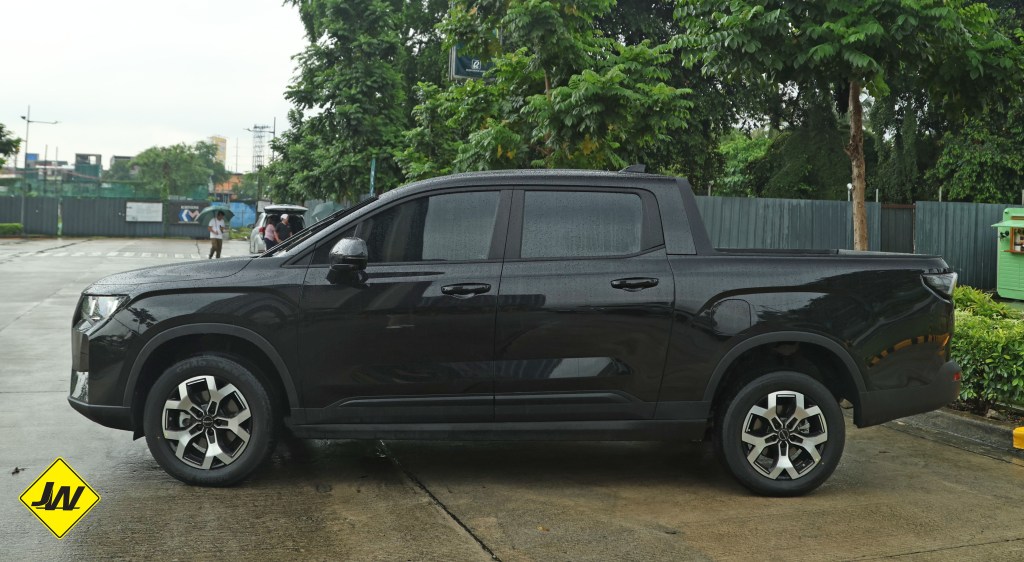
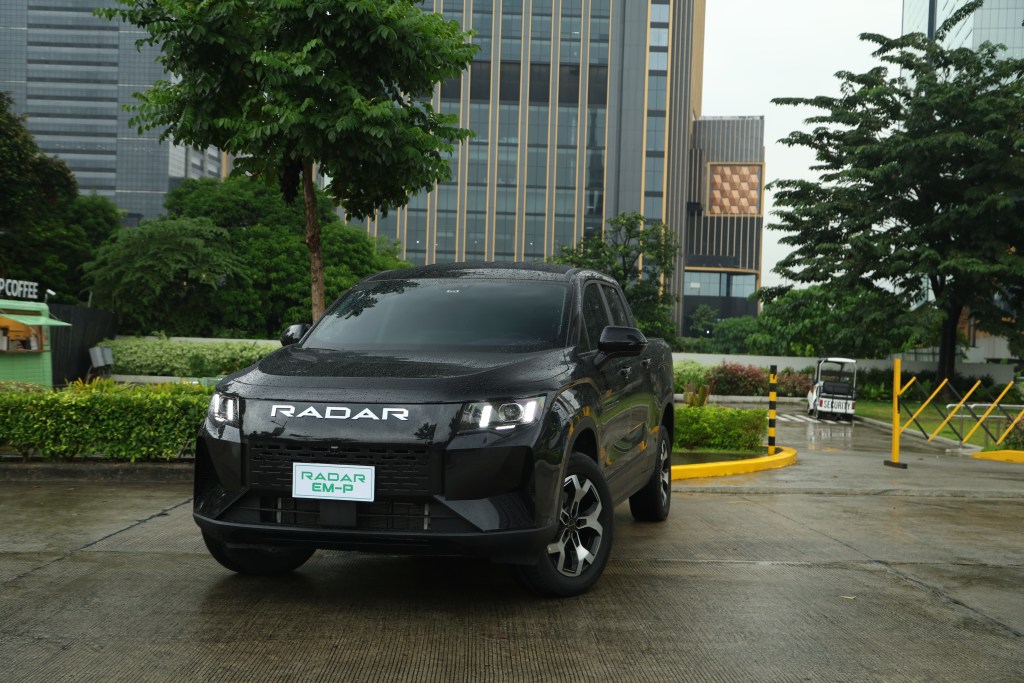
Sizes, Capacities, and Performance Figures
- Length: 5,260 mm (or 5,500 mm for the 73 kWh 4×2)
- Width: 1,900 mm
- Height: 1,865 mm
- Ground clearance: 220 mm (225 mm for the 4×4)
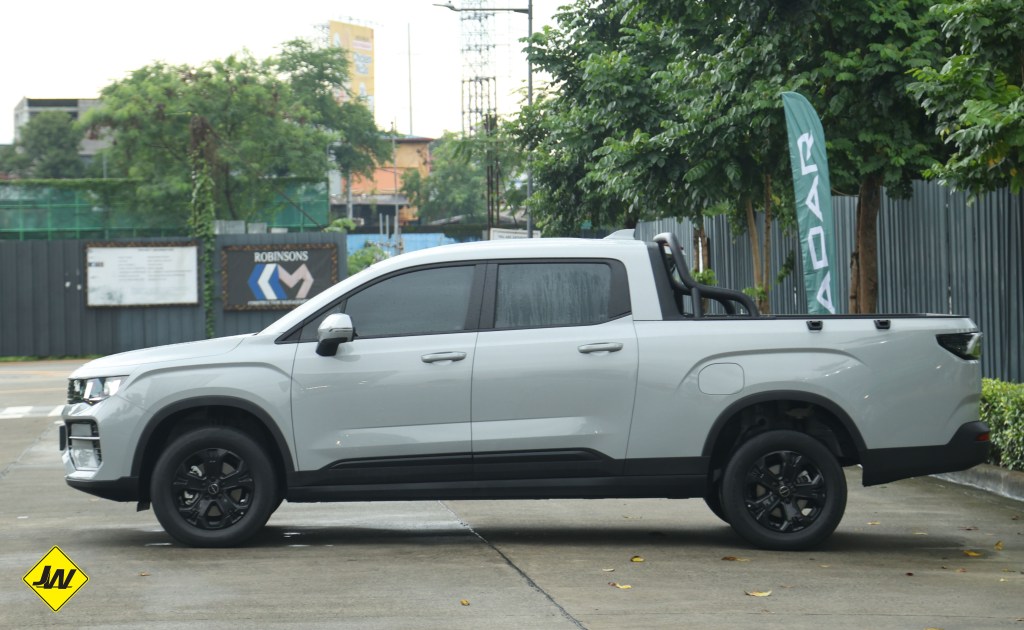
Payload capacity peaks at 1,160 kg (for 4×4), while the 4×2 trims offer around 955 kg. The vehicle also boasts a wading depth of 815 mm and turning radius of 6.1 m.
Performance-wise, the 4×4 version hits 0–100 km/h in 5.7 seconds, with a top speed of 160 km/h (for EV trims).
Features & Tech Inside and Out
Inside the RD6 Econ comes equipped with halogen projector headlights with auto on/off and manual leveling, paired with LED daytime running lights for added visibility. The exterior also features a roll bar and a wear-resistant bed liner. Step inside and you’ll find an 8-inch digital instrument panel and a matching 8-inch infotainment touchscreen that handles multimedia and connectivity functions. The cabin features leather seats, a single-zone climate control system, and push-button start. Safety is well covered with dual airbags, a reverse camera, rear parking sensors, Hill Start Assist, Hill Descent Control, and a tire pressure monitoring system (TPMS).
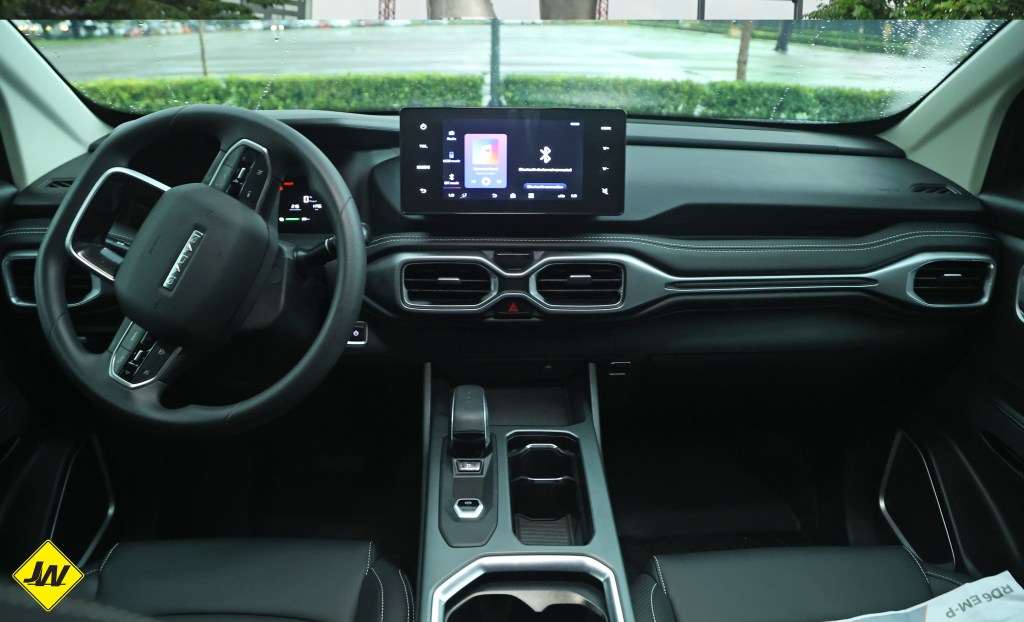
The more upscale RD6 EM-P takes things a step further in both technology and comfort. The Centerpiece of the dashboard is a 14.6-inch central touchscreen complemented by a larger 10.2-inch digital cluster. A panoramic sunroof and the full suite of Level 2 advanced driver-assistance systems, including adaptive cruise control, lane-keeping assist, and a 540-degree camera, are reserved for the top-of-the-line variant. Across the range, the EM-P also adds dual-zone climate control, power-adjustable seats with memory, and soft-touch materials.
Pricing, Warranty, & Market Approach
For the BEV (Econ) versions, list introductory prices in the Philippines are:
- 63 kWh 4×2: ₱1,358,000
- 73 kWh 4×2:₱1,548,000
- 73 kWh 4×4: ₱1,698,000)
For the PHEV (EM-P) line:
- Comfort 4×4: ₱1,658,000
- Elite 4×4: ₱1,758,000
- Luxury 4×4: ₱1,898,000
Warranty coverage is generous: 5 years or 150,000 km for the vehicle, and 8 years or 200,000 km for the battery.
Radar’s strategy also flips the usual EV vs hybrid pricing: the pure EV variant (Econ) is positioned as more accessible, whereas the plug-in hybrid (EM-P) is the premium choice.