April 9, 2026, marked what might be the most crowded edition of the Manila International Auto Show in recent memory. The sheer volume of attendees was immediately noticeable, with packed halls and dense foot traffic across almost every major booth. While part of this can be attributed to the first day coinciding with a holiday (as well as the fact that Alden Richards was there), there is probably a stronger underlying reason that seems to explain the surge in interest: the growing demand for new energy vehicles.
Unlike previous years where a mix of global and legacy automakers dominated the floor, MIAS 2026 presented a noticeably different landscape. With the exception of Kia, most of the participating brands this year were Chinese. Interestingly, this did not appear to be a drawback for attendees, as it was in previous years. If anything, it reflected the current market appetite. Visitors were actively seeking out plug-in hybrids and electric vehicles, something that traditional legacy brands are still catching up on in many segments.
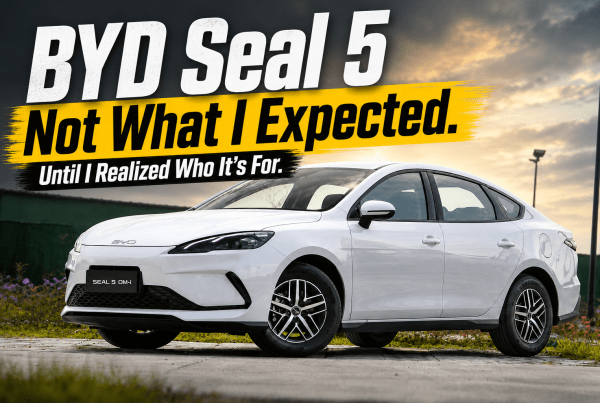
This shift in consumer behavior is not just anecdotal. Several Chinese manufacturers reported strong demand, with some even running out of available units. The momentum behind new energy vehicles is clearly accelerating. BYD, which already ranked as the third best-selling automotive brand in the Philippines last year, appears well positioned to climb further. Given the ongoing fuel crisis this year, it would not be surprising to see them move even higher in the rankings.
Models that stood out
BYD previewed two upcoming models slated for official launch in the second half of the year, the Sealion 7 and the Atto 2. Both are expected to strengthen their already expanding portfolio in the electrified segment.


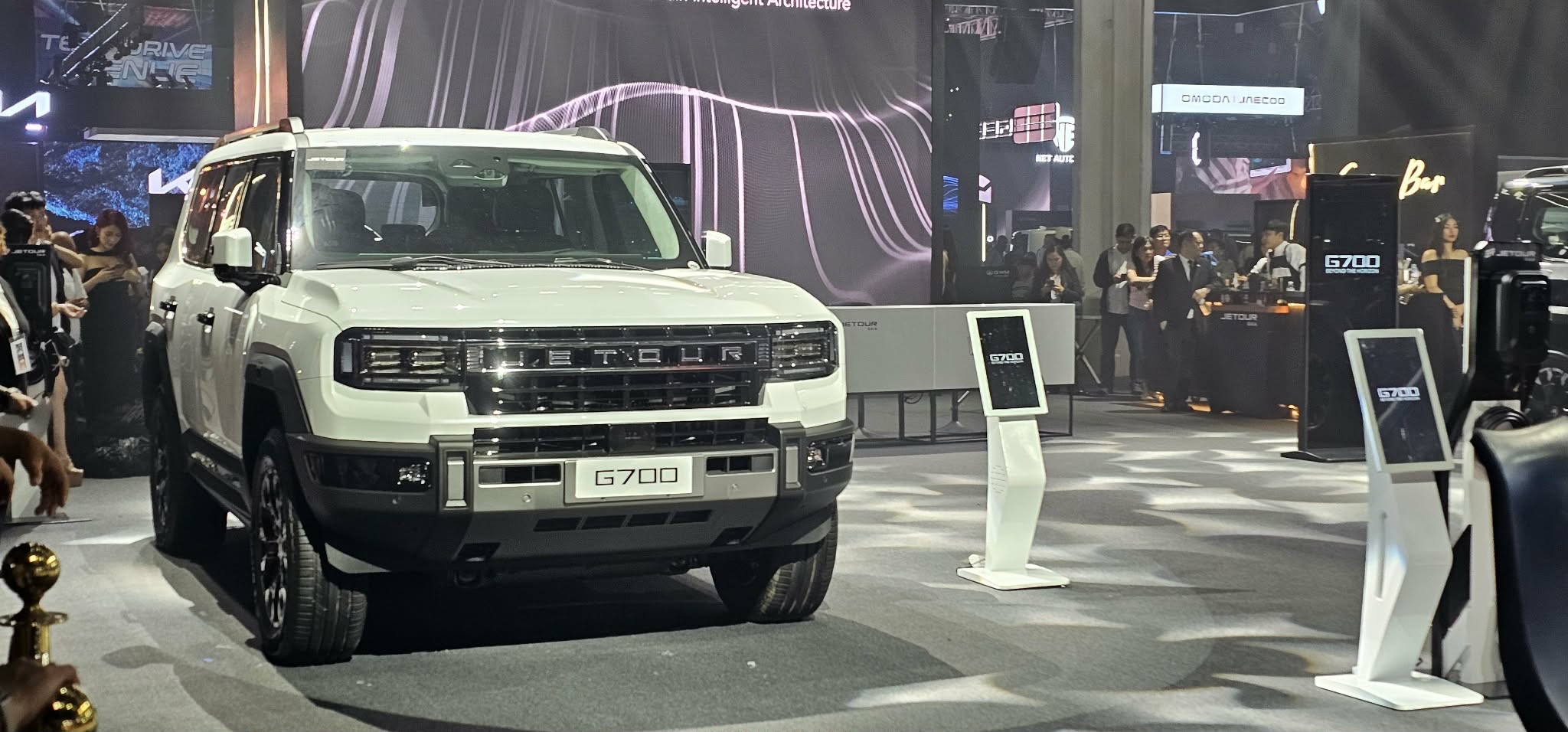
Jetour also had a notable presence. The T1 has been performing strongly, reportedly selling out and accumulating a significant waitlist. Building on this momentum, Jetour introduced a new premium sub-brand called Jetour Gaia. This marks a strategic move toward the higher end of the market. The first model under this new banner is the G700, a full-size plug-in hybrid SUV priced at 4,488,000 pesos. It produces over 900 horsepower and more than 1,000 Nm of torque. It’s also packed with features. We’ll feature this vehicle on the channel soon.


The BAIC B40e Trailmaster rEV also made its debut. It is a rugged plug-in hybrid 4×4 off-road SUV that combines a range-extended electric powertrain with serious capability. It can travel up to 152 km on pure electric power and has a total driving range of over 1,200 km thanks to its range-extender system. The Trailmaster produces around 530 horsepower and 655 Nm of torque while offering vehicle-to-load (V2L) functionality for powering external devices. video preview below:
GWM also brought a strong lineup. The H9 was on display, its impressive in its overall build and capability. But its diesel powertrain may present a challenge in terms of local market acceptance,
The standout from GWM was the Tank 700, a body-on-frame plug-in hybrid SUV with some ridiculously impressive numbers. It delivers over 900 horsepower and more than 1,000 Nm of torque. It has a 59.6 kWh battery pack capable of up to 190 kilometers of pure electric range. Combined range is rated at 1,191 kilometers.


GWM also previewed the Haval H7, a plug-in hybrid crossover equipped with dual motors producing a combined output of 449 PS and 750 Nm of torque. It offers an electric-only range of 151 kilometers. Pricing for both the Tank 700 and Haval H7 has not yet been announced locally.
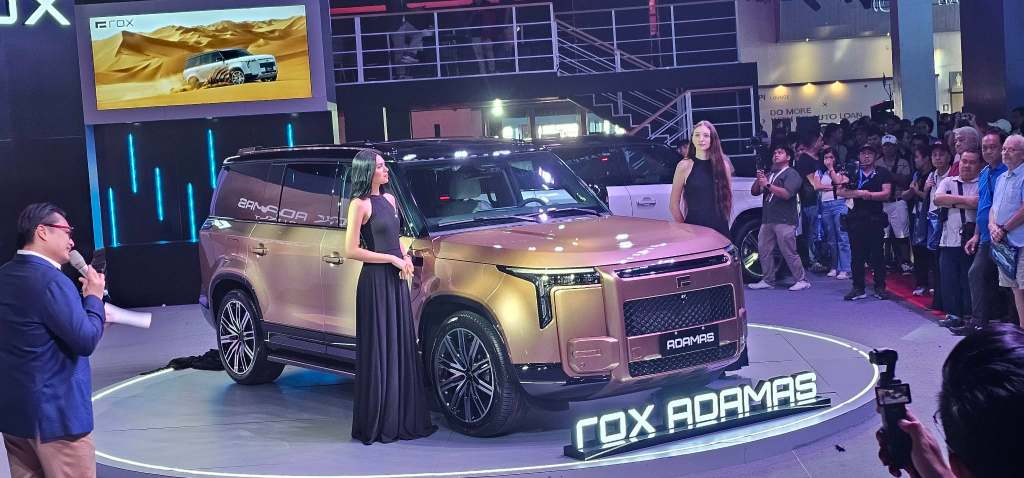
The ROX Adamas debuted at MIAS 2026 as a luxury range-extended SUV. It produces around 476 hp and 740 Nm of torque, with up to 215 km of EV range and over 1,400 km of total range. It will sell for P4,988,000

It was also good to see GAC making a comeback after the closing of Astara. They showcased the GAC GS8 Hybrid, which uses Toyota Hybrid System (THS) technology. It is expected to be priced at 2,488,000 pesos.

Market Shift and Industry Direction
What stood out most across MIAS 2026 was not just the individual vehicles, but the broader direction of the industry. The Philippine automotive market appears to be undergoing a rapid transformation. Incremental improvements are giving way to major leaps in performance, efficiency, and technology. Figures that were once considered unrealistic, such as 900 horsepower outputs in production vehicles, are now becoming increasingly common.
This trend also highlights what can be described as the democratization of ridiculous numbers and features at attainable prices. Capabilities that were once reserved for ultra luxury or exotic vehicles are now being offered at significantly more accessible price points. At the same time, Chinese manufacturers are no longer confined to entry level or mid range segments. They are steadily moving upmarket, with multiple offerings now entering or exceeding the 4 million peso bracket, directly challenging established premium and even luxury brands.
MIAS 2026 ultimately reflects a shifting industry landscape. Instead of gradual, incremental improvements, the market is now seeing leaps and bounds in development within a relatively short period of time. The center of gravity is moving, and it is becoming increasingly clear that electrification, particularly from Chinese manufacturers, is playing a major role in shaping the future of the Philippine automotive market.