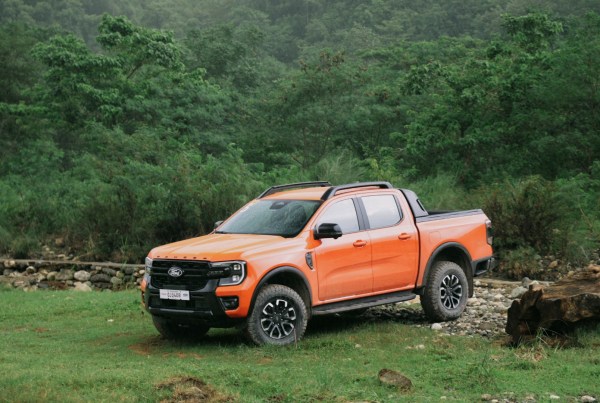

At Jaywalkur Motoring, we don’t like boring cars. We look for vehicles that push their segments forward, challenge expectations or bring something new to the table. We believe that Cars should be engaging to drive, appealing to look at, and desirable in a way that goes beyond just getting from point A to point B.
But excitement alone isn’t enough. We understand that most buyers have real-world considerations. They have Families, responsibilities and budgets to think about. The cars on this list were chosen because they strike a balance between emotional appeal and everyday livability. These are cars that stand out in the Philippine market without demanding unreasonable compromises.
Only cars launched in 2025 and those that I have personally driven and tested qualify for this list.
*This article is a written summary of our video feature. If you want a deeper look at how the rankings came together, along with the full scoring and driving impressions, you can watch the video below. If you’d rather read, just keep scrolling for the list.
#10 Honda Civic eHEV
In a segment with fewer and fewer competitors, the Honda Civic e:HEV stands as a clear figurehead. It carries over five decades of nameplate history and the kind of badge loyalty that very few cars can command.


With the CIvic eHEV, Honda chose to bring its full hybrid system into a segment that most brands have already walked away from. At a time when sedans are being phased out in favor of crossovers and SUVs, the Civic e:HEV proves there’s still room for a premium, efficient, well-engineered hybrid sedan.
It offers the best balance between daily drivability and fun among the cars on this list. It’s comfortable, efficient, and easy to live with during the week, yet still engaging enough to enjoy on a weekend drive. That dual personality makes it especially appealing for buyers who want a proper family car that doesn’t feel dull or disconnected.
What holds it back is its pricing. At nearly ₱2 million, the Civic e:HEV faces tough competition from newer entrants offering more power, stronger electrification, and longer feature lists for significantly less money. It remains an excellent car. But in today’s rapidly evolving market, value matters more than ever.
For our review of the Honda Civic eHEV, click on this link
#9 Mitsubishi Destinator


The Mitsubishi Destinator earns its place on this list by representing a subtle but important shift for the brand. Rather than sticking to the barebones, utilitarian formula Mitsubishi has long been associated with, the Destinator introduces more power, more technology, and a more premium feel into the family-oriented segment. It signals Mitsubishi’s intent to stay relevant in an increasingly competitive market. It brings a stronger powertrain and improved refinement to a segment where buyers have traditionally been asked to accept compromise. It challenges the idea that seven-seat family vehicles from mainstream brands need to feel slow, dated, or under-equipped.
Where it loses ground is in fuel efficiency and overall forward-thinking appeal. At around the ₱1.9 million mark, many competitors now offer plug-in hybrid or full EV powertrains. The Destinator, by comparison, sticks to a traditional internal combustion engine. While that may appeal to buyers who prefer familiarity and simplicity, it also means fuel economy can’t quite match the electrified alternatives in its price bracket. It also misses out on number coding exemption.
That ultimately explains its position on this list. In a year defined by electrification, bold design, and aggressive pricing strategies, the Destinator plays it safe. But that conservatism is also its strength. it will resonate strongly with buyers who value familiarity, and a proven formula over cutting-edge disruption.
#8 Jetour T2 i-DM
The Jetour T2 IDM is one of the boldest-looking vehicles on this list, and that alone makes it difficult to ignore. In a market full of safe, predictable crossovers, the T2 leans heavily into rugged, adventure-inspired design. More importantly, it doesn’t just look premium, it actually feels premium once you step inside.


Priced at ₱2,488,000, it sits in the same territory as top-of-the-line mainstream diesel PPVs. That’s an interesting positioning strategy. While it gives up the seven-seat capability and ladder-frame toughness those PPVs offer, it makes up for it with superior on-road refinement and plug-in hybrid capability. It’s quieter, smoother, and more modern in its overall driving experience.
Its main selling point is still its macho presence. This is a vehicle you buy because you want something that looks commanding and distinct in a sea of family SUVs. That said, the design does raise one lingering question: with styling this aggressive, a 4WD variant would have made the package feel more complete. The looks promise adventure, and a proper off-road drivetrain would have fully delivered on that promise.
The T2 IDM ultimately settles into 8th place because while it arguably pushes the design envelope further than most, there are other SUVs on this list that follow a similar rugged design philosophy at a lower price point. They may not look quite as aggressive but they deliver a comparable vibe for less money.
#7 Ford Territory Hybrid
At ₱1.59 million, the Ford Territory Hybrid stands out as one of the most high-tech crossovers that you can get from a mainstream brand. It comes generously equipped with advanced driver-assistance systems, a long list of convenience features, and one of the most spacious and premium-feeling cabins in its class. On top of that, it’s a full hybrid, so it gets improved fuel economy and number coding exemption.


That combination is what makes it so compelling. It delivers technology, space, refinement, and electrification in a package that still feels familiar and easy to own. For many buyers stepping into hybrid ownership for the first time, the Territory Hybrid makes the transition seamless rather than intimidating.
There are challengers from newer, less traditional brands that offer slightly more features or performance at a similar price point. However, what the Territory brings to the table is brand familiarity, dealer network confidence, and a product that feels polished and well-integrated.
#6 Jetour X70 Lightning i-DM
What sets the Jetour X70 apart from its mainstream rivals is its combination of plug-in hybrid capability and genuine seven-seat practicality. At the moment, that’s a pairing you simply don’t get from traditional mainstream brands in this price range.


The X70 can travel over 100 kilometers in pure electric mode alone, making daily commutes possible without using fuel at all. When combined with its internal combustion engine, total driving range stretches beyond 1,000 kilometers, effectively eliminating range anxiety while still delivering the benefits of electrified driving.
That dual nature is what strengthens its value proposition. It doesn’t just offer features; it offers capability that directly impacts running costs and long-distance usability. For buyers who want one vehicle to handle school runs, coding days, and out-of-town trips, the X70 makes a very convincing argument.
What slightly limits its appeal, however, is its use of the GBT charging standard, which is less common locally compared to other connector types. While home charging remains the primary solution for most PHEV owners, wider public charging compatibility would have made the overall ownership experience even more seamless.
#5 – Jetour T1 Lightning i-DM
Think of the Jetour T1 as a slightly smaller, less aggressive and significantly more affordable interpretation of the T2. It shares the same core drivetrain philosophy as its bigger sibling, albeit paired with a different transmission, delivering similar punch and refinement in a more accessible package.


Like the T2, the T1 is unapologetically style-driven. But unlike the T2, it comes in at a much lower price point, making its bold design easier to justify. In a segment largely populated by softer, more family-oriented crossovers, the T1 stands out with sharper styling, strong power output, and a level of refinement that feels a step above the norm.
At around ₱1.8–1.89 million, it isn’t necessarily the outright value leader on paper. It doesn’t win by overwhelming the segment with the longest feature list or the lowest sticker price. Instead, it competes on identity. The T1 has a clear point of view—it knows exactly what it wants to be.
Ultimately, what justifies its price is the balance of character and capability. It delivers presence, performance, and everyday usability in a package that feels cohesive and intentional, which is why it comfortably earns its place in the top five.
#4 Changan Nevo A05
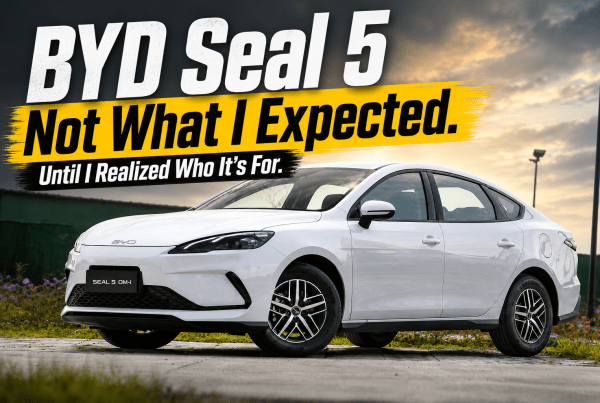
If you think of an affordable plug-in hybrid sedan, the first name that likely comes to mind is the BYD Seal 5, which placed in our top four last year. Since it launched the previous year, it no longer qualifies for this year’s list. What does qualify, however, is a sedan that offers even more features at roughly the same price point, the Changan A05.


The A05 makes a compelling case as the most feature-packed sedan you can buy for under ₱2 million. It comes equipped with a full ADAS suite, plug-in hybrid capability with an all-electric range of up to 130 kilometers, and a total extended range of around 1,250 kilometers. It’s also quick, capable of sprinting from 0–100 kph in just 6.9 seconds.
What makes all of that more impressive is the price: ₱1,195,000. It delivers performance, technology, and electrification numbers that would have been unthinkable at this price point just a few years ago.
In many ways, the A05 redefines what “entry-level” means in today’s market. It feels complete, modern, and surprisingly quick, which is exactly why it lands comfortably in fourth place this year.
#3 BYD Shark 6
The BYD Shark 6 launched in a sea of diesel pick ups and immediately made everything else feel like the dinosaurs that their fossil fuels are made from.
This isn’t a case of offering a few extra features or a bigger screen for the money. The Shark 6 delivers something its mainstream rivals simply do not: plug-in hybrid capability. While most Japanese and American competitors continue to rely solely on diesel, the Shark 6 introduces electrification, significantly improved efficiency, and a level of refinement that traditional ladder-frame pickups struggle to match.


It also backs up its innovation with serious performance. With a combined output of 430 horsepower and a 0–100 kph time of just 5.7 seconds, the Shark 6 isn’t just efficient, it is very quick.
Buyers may still hesitate because of the badge on the grille, but that hesitation doesn’t change the reality of the market: at the moment, there is no direct equivalent from mainstream Japanese or American brands. Whether you embrace it or not, the Shark 6 has already shifted the conversation around what a pickup can and should be.
#2 Tesla Model Y
Within just a year of its official launch in the Philippines, the Tesla Model Y has already captured a significant share of the local EV market. Its pricing may not look inexpensive when compared directly to internal combustion vehicles, but within the EV space, it undercuts several Korean rivals and even some Chinese competitors. That aggressive positioning alone reshaped the competitive landscape.


One of its main selling points is Tesla’s Supercharging network which currently offers cheaper rates and a more streamlined interface than competing systems. AC charging costs around ₱16 per kWh and DC charging at roughly ₱19 per kWh, significantly lower than EVRO’s 28.5 pesos per kWh for AC and 33 pesos per kWH for DC.
Of course, the Model Y’s appeal isn’t purely rational. It looks modern, clean, and aspirational. There’s a certain tech-forward image that comes with owning a Tesla, and for many buyers, that badge carries weight beyond just performance figures and range numbers. It also has almost 300hp, ir rear wheel drive and it can do 0-100kph in 5.9 seconds so it is quite a bit of fun to drive.
Ultimately, the Model Y earns its #2 spot because of its high market disruption. It has changed the EV conversation locally in a very short time. But while its impact is undeniable, the top spot this year goes to the vehicle that balances disruption, accessibility, and real-world practicality just a little bit better.
#1 Chery Tiggo rEV
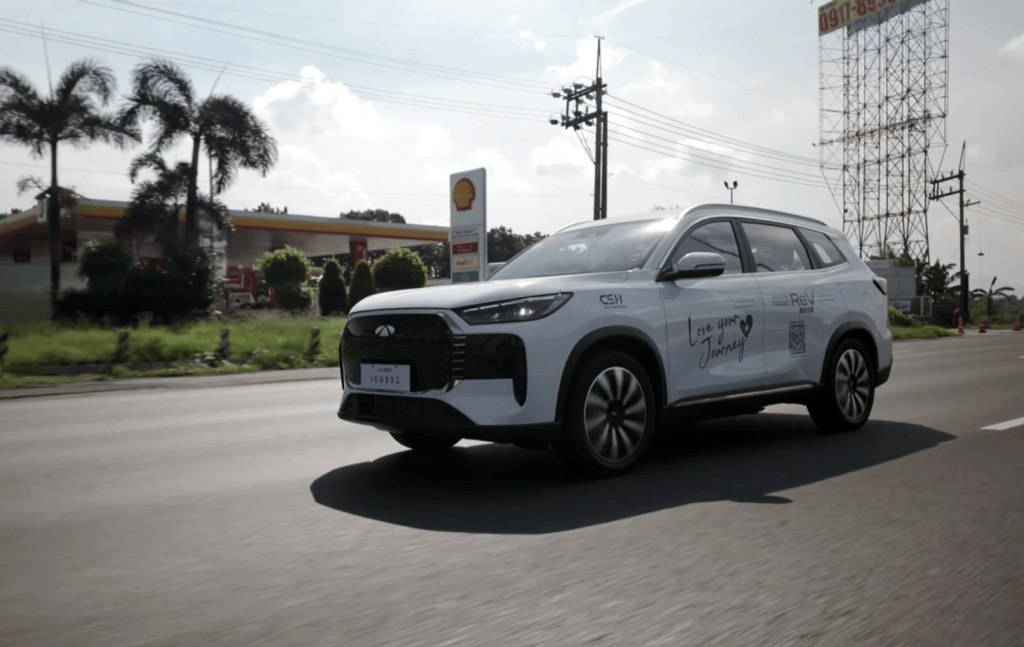
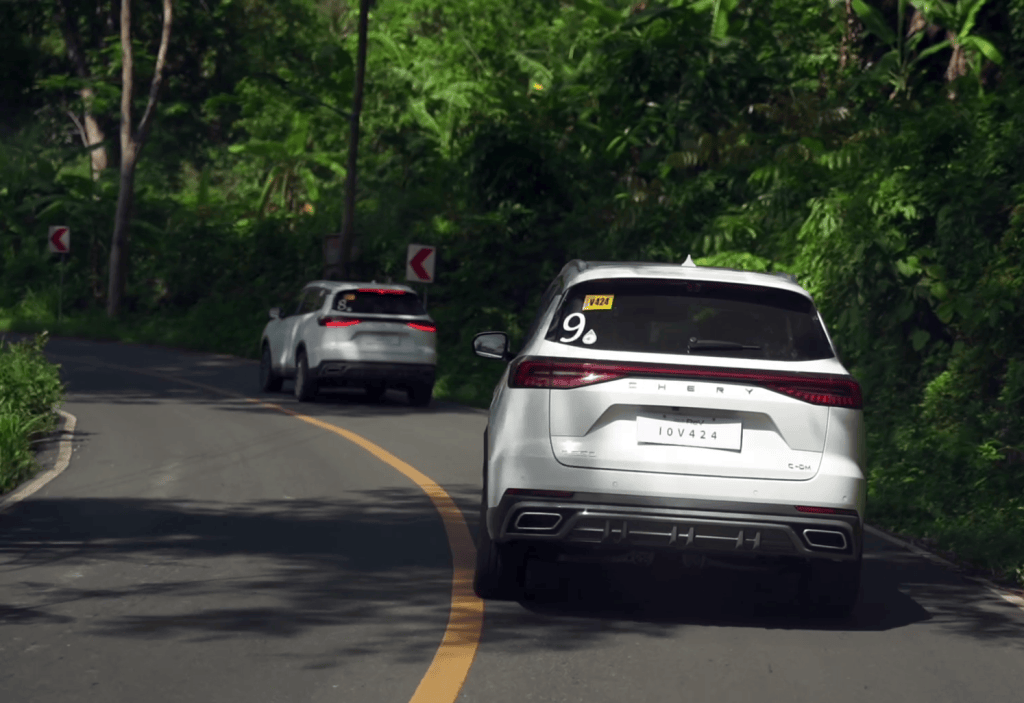
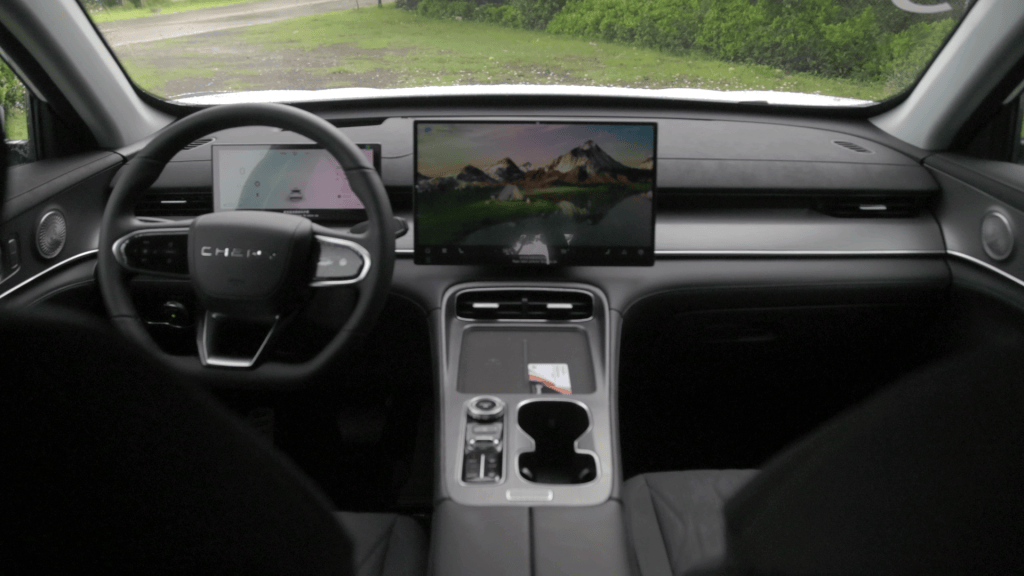
The Chery Tiggo REV is now the benchmark that other 7 seater crossovers will be measured against. It’s a plug-in hybrid offering up to 130 kilometers of pure electric range and an extended total range of around 1,400 kilometers. Figures that immediately place it at the forefront of its segment.

What makes its position even stronger is the pricing. At ₱1,528,000, it sits in the same bracket as the Sealion 6 while offering the added practicality of a third row. It also uses the more widely adopted Type 2 / CCS2 charging standard, making both AC and DC public charging far more convenient. Add to that the benefit of number coding exemption, and the Tiggo REV becomes even more practical for daily urban use.
Performance and efficiency are equally impressive. It’s quick when you need it to be, smooth in traffic, and remarkably efficient in real-world driving. Yet none of that comes at the expense of comfort. The interior feels premium, NVH levels are well managed, and the feature set rivals vehicles that cost significantly more.
The Tiggo REV delivers capability, refinement, efficiency, and practicality in one cohesive package. It minimizes the urge to spend more because it already delivers nearly everything most buyers could realistically want. Nothing about the experience suggests compromise. And that, ultimately, is why it earns the number one spot.
At the end of the day, different people have different needs. There’s no such thing as a one-size-fits-all car. My number one pick on this list may not be the right choice for you. You might even feel the rankings should be rearranged.
But that doesn’t take away from the fact that every vehicle on this list is impressive in its own right. Each one stands out, disrupts its segment, challenges expectations, and brings something distinct to the market.
There are no boring cars here, and that’s exactly where the industry should be right now.
For a more detailed breakdown of how I came up with the rankings, watch the video linked above: