
The Shift Is Impossible to Ignore

If you haven’t been living under a rock for the past couple of years, you’ve probably noticed that Chinese cars are taking the spotlight.
Last year, BYD became the third best-selling automotive brand in the Philippines. Globally, it has become the world’s best-selling new energy vehicle manufacturer, overtaking many of the industry’s established players.
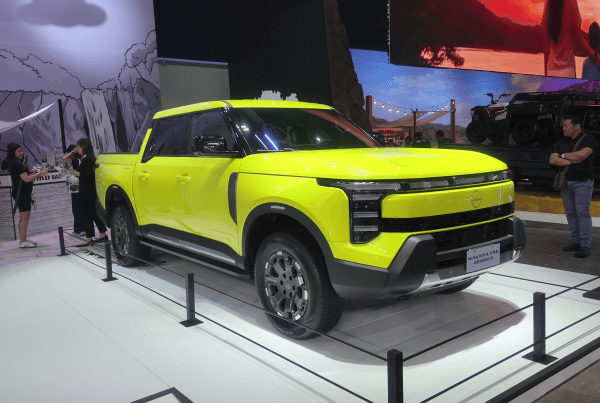
At this year’s MIAS (Manila International Auto Show), Chinese brands occupied much of the conversation and much of the floorspace, unveiling everything from affordable hybrids to high-end luxury vehicles packed with technology.
How did Chinese automakers go from being dismissed as copycats just a couple of decades ago to becoming some of the most innovative and fastest-growing car companies in the world today?
There’s a real shift happening in the automotive industry, and it’s becoming increasingly difficult to ignore.
Inside China’s High-Tech Factories


I’ve seen some of this transformation firsthand. Over the years, I’ve had the opportunity to visit several automotive factories in China, invited by manufacturers eager to showcase their operations.
One thing consistently stood out: the level of automation. In some sections of these factories, there are barely any people at all. Rows of robots weld, assemble, inspect, paint, and transport components with surgical precision. These are not aging facilities that have gradually modernized over time. Many were built relatively recently and designed around efficiency, flexibility, and large-scale production from the very beginning. They are also designed around new energy vehicles. When factories are built specifically for these vehicles from the ground up, manufacturers can streamline production and eliminate many of the compromises that come from adapting older facilities.
Another advantage lies in the surrounding ecosystem. China is home to many of the companies that supply the most critical components used in modern electric vehicles. CATL, the world’s largest battery manufacturer, is based there. BYD, one of the world’s largest producers of EV batteries, is based there as well.


The battery is typically the most expensive component in a new energy vehicle. When automakers can source batteries and other critical components domestically, coordination becomes easier, logistics become simpler, and production becomes more efficient. Costs can also be brought down.
In many traditional automotive markets, supply chains stretch across multiple countries and suppliers. In China, much of that ecosystem exists within the same industrial network. As electrification accelerates, that concentration of suppliers and manufacturing capability has become a significant competitive advantage.
The BYD System
To understand how far China’s automotive model has evolved, it helps to look at BYD. Unlike most global automakers, which source the majority of their components from external suppliers, BYD follows a very different approach.The company produces around 75 percent of its vehicle components in-house, covering everything from batteries and semiconductors to core structural and electronic systems.
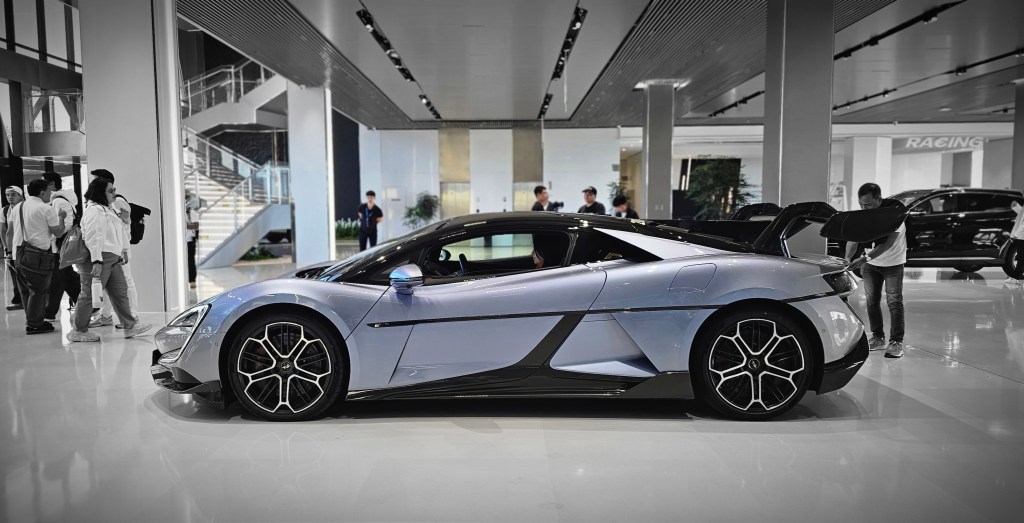
Most people already know BYD for its batteries. What’s less widely known is what else they build in-house. They also develop semiconductors and other key components. When everything sits under one organization, coordination becomes less about negotiation and more about alignment. Teams can work directly with each other instead of moving through layers of external suppliers.


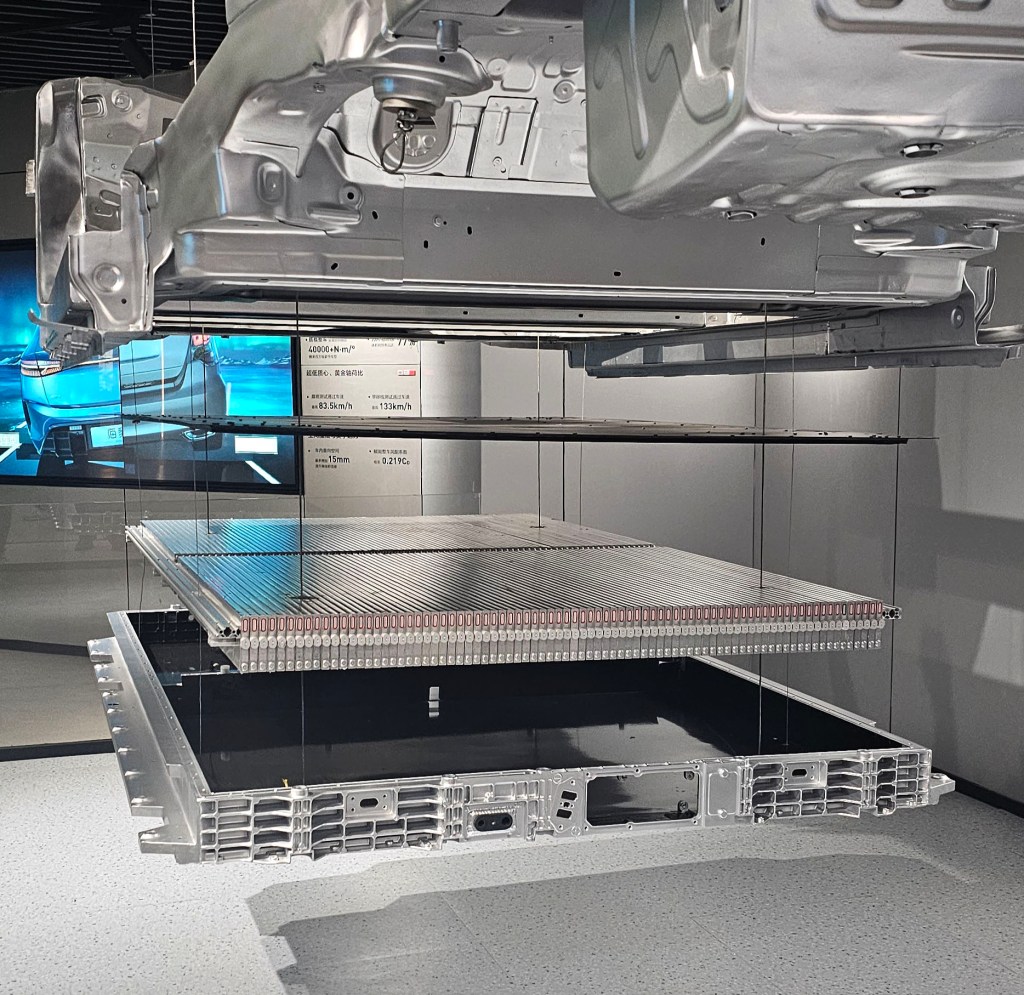
It also changes how quickly decisions translate into action. In a traditional setup, even a small change can mean revisiting supplier agreements, adjusting timelines, and waiting for different partners to respond. At BYD, those steps are largely internal. That allows multiple parts of the system, from batteries to software to vehicle architecture, to move at the same time.
The impact shows up most clearly in development speed. BYD takes about 18 to 24 months to bring a vehicle from concept to production. For comparison, many established global automakers, particularly in Japan and the West, still operate on cycles closer to 4 to 5 years.
But the advantage is not only about speed. With fewer external dependencies, there are simply fewer points of delay in the system. Engineering teams can work more freely across the entire vehicle program without waiting on outside coordination.
The result is a setup that should make BYD more resilient to supply chain disruptions, both in the present and in the years ahead. Especially in areas like batteries and EV power electronics, where much of the production is handled internally.
Home Turf Advantage: The World’s Largest Automotive Market
Part of China’s success comes from something many people overlook: its domestic market. China is currently the largest automotive market in the world. In 2025, about 34.4 million vehicles were sold in China, compared to approximately 16.4 million in the United States and 10.82 million in the E.U. In other words, China’s automotive market is more than twice the size of the U.S market and bigger than the U.S and E.U markets combined
Even more remarkable is that roughly half of all vehicles sold in China were classified as new energy vehicles, including battery electric vehicles and plug in hybrids. That means Chinese manufacturers are developing and refining electrified vehicles in the world’s largest proving ground for EV technology.

That scale gives local manufacturers a huge advantage. Companies can develop products, gather customer feedback, refine technologies, and achieve economies of scale without relying heavily on exports.
BYD is perhaps the best example. The company became one of the world’s largest automakers without selling cars in the United States, the world’s second-largest automotive market.


Gone are the days when Chinese cars were cheap uninspiring knock offs. They have redefined premium and have become desirable in their own right.
And the advantage isn’t just size. It’s also competition. Chinese automakers operate in one of the most fiercely contested automotive markets on the planet. Dozens of brands compete for the same customers, often launching new models and introducing new technologies at an astonishing pace. If one manufacturer introduces a larger battery, a more advanced infotainment system, or a lower price point, competitors are forced to respond quickly. The result is a constant arms race in technology, features, and value.
Meanwhile, many Western manufacturers have traditionally enjoyed stronger protection in their home markets. The United States, for example, remains largely insulated from direct competition from Chinese brands. While that has helped protect domestic manufacturers, it has also reduced some of the pressure to innovate at the same pace.
Yet massive factories, localized supply chains, and a huge domestic market only explain part of the story. To understand why Chinese brands seem capable of bringing new vehicles to market so quickly, I wanted to hear from someone who had experienced both sides of the industry.
A View From Both Sides: A Former Toyota Engineer’s Perspective

Recently, I was able to speak with Masato Katsumata, an engineer who spent much of his career at Toyota before moving to China to work with GAC. I met him during an industry event where we were seated at the same table. It wasn’t a formal interview. The conversation simply drifted toward vehicle development, engineering, and how different companies approach the process of bringing a car to market.
Having spent much of his career inside Toyota before moving to China, Katsumata occupies a relatively uncommon position in the industry. Few engineers have had the opportunity to experience both systems from the inside.
What made the conversation particularly interesting was that many of the differences he described mirrored what I had already observed while visiting Chinese factories and speaking with manufacturers over the years. The speed visible on the factory floor appeared to be reflected in the way vehicles were being developed as well.
Why Chinese Brands Move Faster
One of the clearest differences he highlighted was the relationship between hardware and software development. In many traditional automakers, hardware and software development are closely linked. If one side falls behind schedule, the entire project can slow down. The process is highly coordinated and methodical, but it can also be time-consuming.


We got to see the T2 pre production engineering unit in 2023. In 2024, a year later, it launched in the Philippines
According to Katsumata, Chinese manufacturers often take a more flexible approach. Hardware development can continue while software is still being refined. Rather than waiting for one side to finish before the other progresses, both can move forward simultaneously.
That may sound like a small difference, but across an entire vehicle program, it can have a significant impact on development speed. He pointed to the GAC Aion UT as an example. According to Katsumata, the vehicle was developed in approximately 20 months. In an industry where complete vehicle programs often take several years, that timeline is very aggressive.
There are probably many reasons behind that speed, but the broader theme was clear: Chinese manufacturers are more willing to build their development process around speed and doing things in parallel rather than one step at a time.
Why China Is Pulling Ahead
Of course, speed alone does not guarantee success. Durability, customer support, reliability, and brand trust still matter a lot. Legacy manufacturers spent decades building those strengths, and they remain significant advantages today.
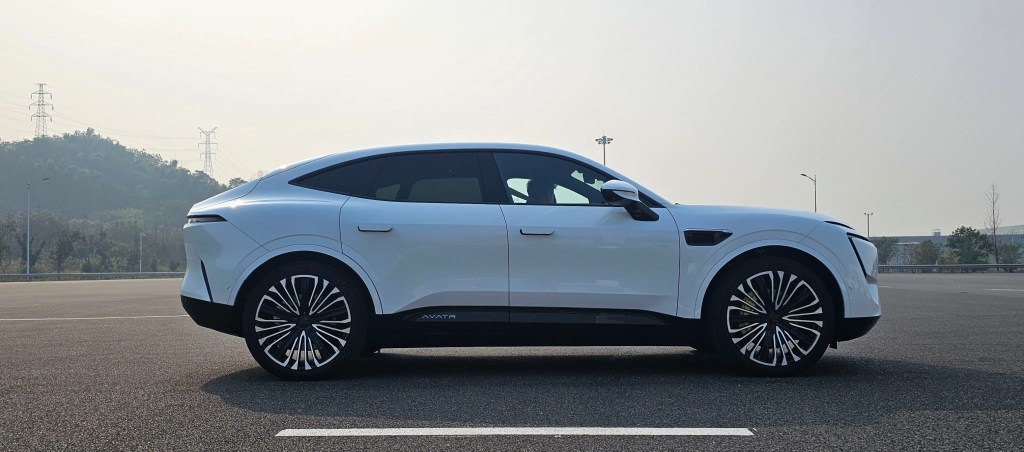
But it is becoming increasingly clear that Chinese automakers are no longer simply trying to catch up. They have modern factories designed around electrification, deep integration across key parts of the supply chain, a domestic market unlike anything else in the world, and development processes optimized for speed.
For decades, the automotive industry looked to Japan, Germany, and the United States to see where the future was headed. Increasingly, that attention is shifting toward China.
Whether Chinese automakers can maintain this momentum over the long term remains to be seen. Legacy manufacturers still possess enormous strengths in engineering, brand recognition and customer trust.
But one thing is becoming increasingly clear. many of the companies setting the pace for the industry’s future are now coming from China.
Data sources:
https://www.scribd.com/document/902452082/byd-scm-case-study
https://supplychaincommunity.org/how-byds-vertical-integration-is-shaping-the-future-of-supply-chains/|
https://carnewschina.com/2026/02/26/three-chinese-automakers-enter-global-top-10-as-2025-sales-rankings-finalized/