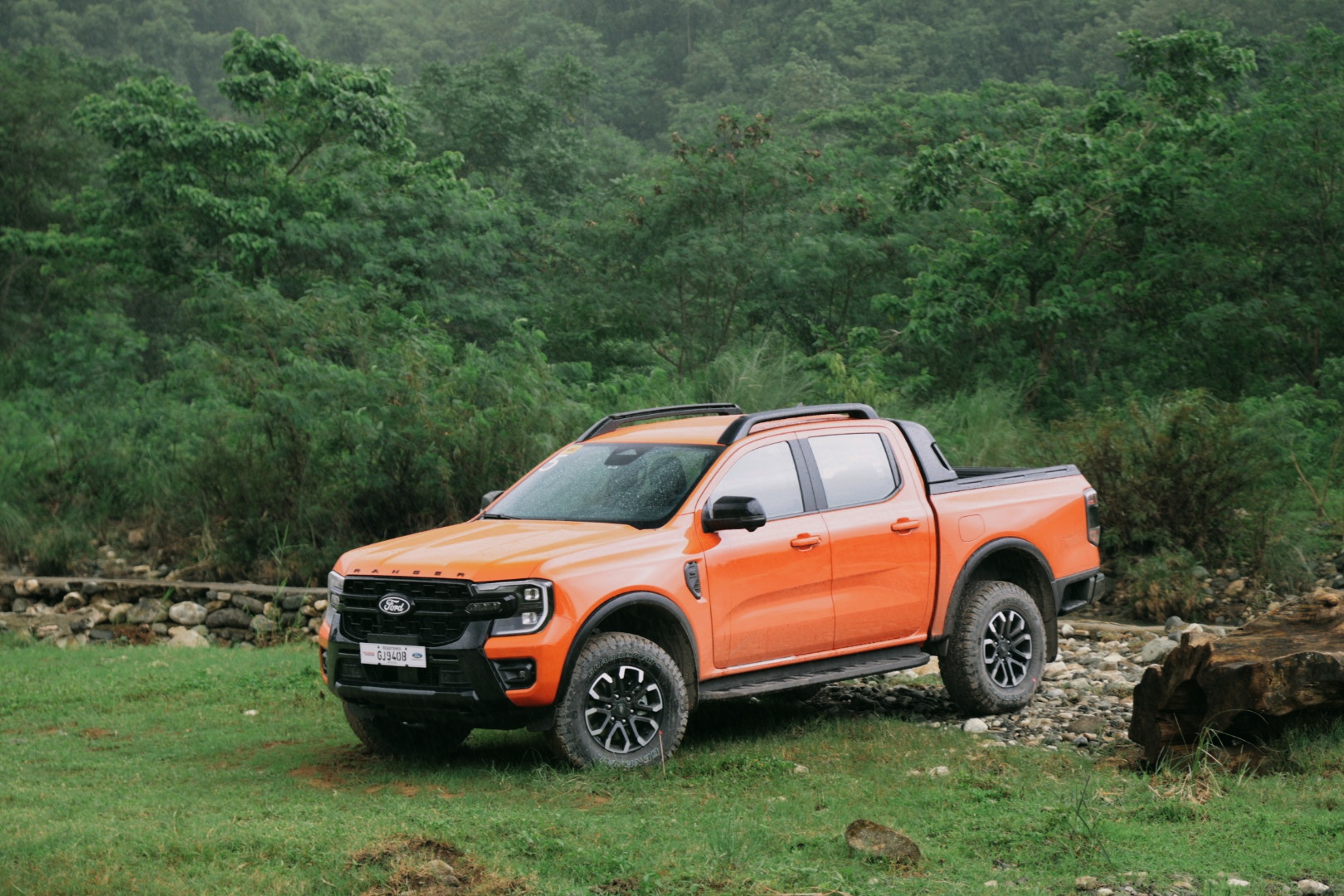
Ford has significantly changed its Ranger and Everest lineup for the Philippine market, and we recently got the chance to experience those changes firsthand during a two-day media drive.
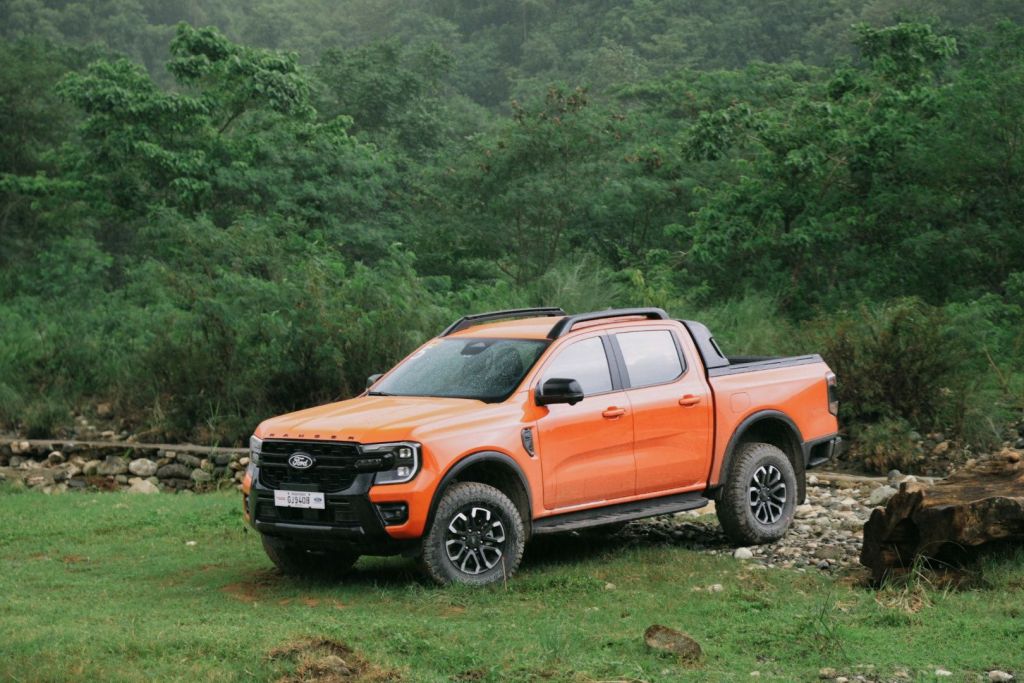
Over the course of the drive, we took the new Ranger Wildtrak X, Ranger Wildtrak, Everest Sport and Everest Platinum from Okada Manila to Tanay, Rizal, then down to Batangas before returning to Manila.
The biggest story, of course, is the engine.
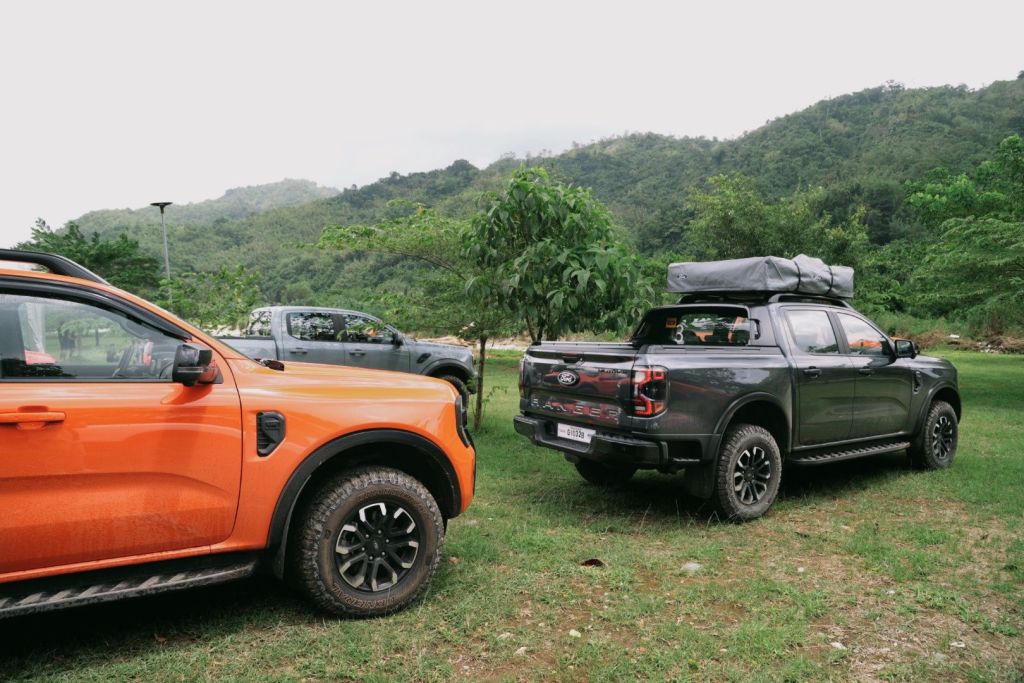
The Ranger now gets a V6 diesel across the entire lineup, while the range-topping Everest Platinum also gets the same 3.0-liter V6 diesel. The rest of the Everest lineup continues with the 2.0-liter single-turbo diesel. The 2.0L bi-turbo will be discontinued.
Ford has also moved the Ranger upmarket, dropping its lower-spec variants. The Wildtrak 4×4 is now the entry point at ₱2.469 million. But what we really wanted to find out was what that V6 diesel actually does to the Ranger.
The V6 Makes a Big Difference

We started at Okada Manila and headed towards Tanay, where Ford had prepared an off-road course. Unfortunately, the weather didn’t cooperate. The rain meant we had to take a lighter trail, so we didn’t really get to push the Wildtrak X through challenging terrain. That’s something we’ll have to save for a proper review.

What we did get plenty of time to experience were the winding roads around Tanay. The 3.0-liter V6 diesel produces 250 PS and 600 Nm of torque, and there’s no question that the Wildtrak X has plenty of power.
More importantly, it feels effortless. Overtaking is considerably easier, and there’s plenty of power in reserve when climbing or carrying speed through winding roads. Because we were able to drive the vehicles back-to-back, the difference was particularly noticeable.
We also had the Everest Wildtrak with us, which uses the 2.0-liter single-turbo diesel. Going directly from the V6-powered Ranger into the 2.0-liter Everest, the differrence was night and day. Overtakes that felt almost casual with the V6 required considerably more planning in the 2.0-liter. Overtaking felt a lot safer as you could get in front of the vehicle you’re overtaking in a lot less time.
The V6 also feels noticeably smoother and quieter than the four-cylinder. Another important change is that the 2.0L now uses a timing chain instead of the previous wet timing belt.
All Ranger and Everest Variants Now Come with a 10-Speed Transmission
Ford has ditched the 6-speed and all variants of the Everset and Ranger now come with a 10 speed transmission.The 10-speed automatic works well most of the time, but when driving enthusiastically, it doesn’t respond as quickly as I would like.
Step on the accelerator for an overtake and the transmission can take a moment before deciding to downshift.
You can manually shift using the buttons on the gear selector, but those small buttons aren’t particularly convenient when you’re driving through a series of corners. The thing that I wanted it to have the most are paddle shifters, which currently you can only get on the Ranger Raptor.
More Than Just a V6
The Wildtrak X also gets significant upgrades beyond the engine. Ford has fitted Bilstein dampers, it has a slightly higher ride height, 265/70 R17 all-terrain tires and a re-tuned suspension
It also gets 4A mode, or four-wheel-drive automatic, allowing you to use four-wheel drive even on sealed roads while the system manages traction automatically. We actually drove in 4a mode on the highway and in the twisties
These changes bring the Wildtrak X closer to the Ranger Raptor in capability, although it remains a different vehicle. The Raptor still gets the more serious suspension, wider body, larger tires and a 3.0-liter twin-turbo V6 gasoline engine producing 397 PS and 583 Nm.

The Raptor is clearly the better choice for performance and off-road capability. The Wildtrak X’s advantage is its diesel powertrain, which should offer better fuel economy and greater range while still giving you some of the Raptor’s character.
Still the Benchmark for Ride and Handling
Another area where the Ranger continues to impress is its suspension tuning. I’d still consider the Ranger a benchmark among mainstream pickups when it comes to ride and handling.
It rides better than most Japanese pickups in the segment, absorbing bumps without feeling excessively soft. At the same time, it stays relatively flat through corners.

That was particularly noticeable on the twisty roads of Tanay. The Wildtrak X feels planted and predictable, with relatively little body roll when you’re carrying speed through corners.
It still feels like a body-on-frame pickup, but Ford has managed to give it road manners that are closer to an SUV than what you’d traditionally expect from a truck.
What About Fuel Economy?
Our drive wasn’t ideal for testing fuel consumption. If we were not stuck in very heavy traffic, we were driving aggressively on uphill mountain roads so I’ll hold off on releaseing fuel economy numbers until I get to have more seat time in the vehicle, But the numbers that we got were still better than the Ranger Raptor V6 and slightly worse than the 2.0 single turbo
The Everest Platinum
The Everest Platinum follows a slightly different formula.
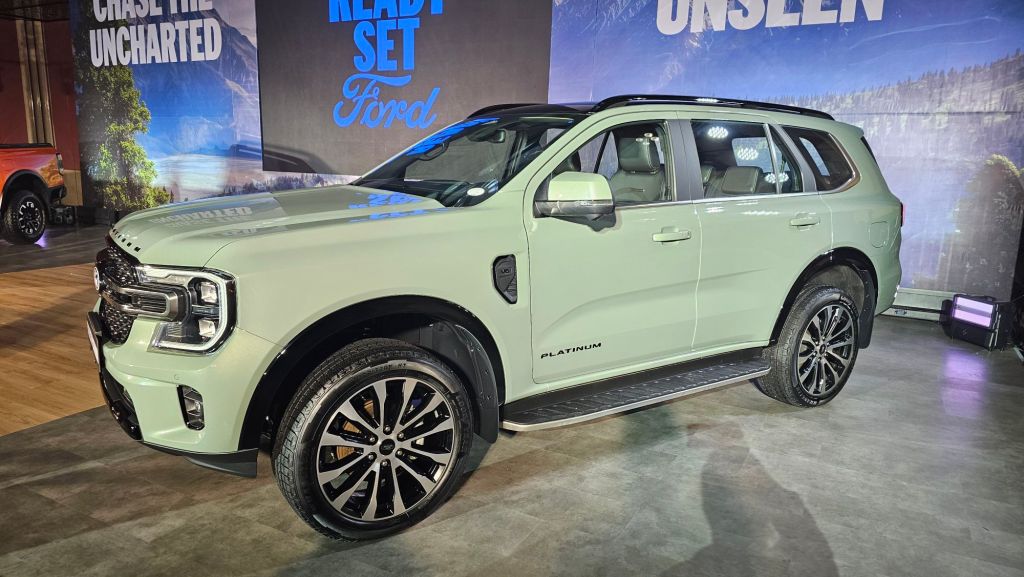
While the rest of the Everest lineup continues with the 2.0-liter single-turbo diesel, the Platinum gets the 3.0-liter V6 diesel with 250 PS and 600 Nm.
The V6 gives the Everest a lot more power and much better refinement, but unlike the Wildtrak X, the Platinum doesn’t receive as many mechanical upgrades over the Titanium.
Instead, it gets 21-inch wheels, a Bang & Olufsen sound system and several styling and interior upgrades.
The Price
The Ranger Wildtrak 4×4 starts at ₱2.469 million, the Wildtrak X 4×4 is ₱2.609 million, and the Ranger Raptor V6 is ₱2.879 million.
For the Everest, the Wildtrak 2.0 4×4 costs ₱2.669 million, while the Everest Platinum V6 4×4 is ₱2.849 million.
That puts the Wildtrak X just ₱270,000 below the Raptor, making the comparison inevitable.
The Raptor is the more capable and exciting machine, but the Wildtrak X is aimed at buyers who prefer a diesel powertrain and want some of the Raptor’s capability without going all the way to the performance pickup.
Final Thoughts
After two days and hundreds of kilometers behind the wheel, the biggest takeaway is just how much the V6 changes the character of the Ranger. It isn’t simply faster. It’s smoother, quieter and much more effortless, particularly when overtaking.
And with the Wildtrak X, Ford has added enough suspension and off-road hardware to make it a desirable off road machine.
We weren’t able to properly test those capabilities off-road because of the weather, so there’s still plenty we need to find out.
But based on what we did get to drive, Ford has created an interesting middle ground between the conventional Ranger and the Raptor.
The question now is whether that middle ground is worth ₱2.609 million.
That’s something we’ll have to answer after spending more time with it.
Full video below: